To track tenant payments and send reminders effectively, keep each charge, due date, payment status, and follow-up message tied to one clear record. That simple structure prevents two common problems: overlooking an unpaid request and sending a reminder for a payment that was already received.
For rent and shared expenses, the process works best when the original request is complete, payment statuses are reviewed on a schedule, and reminders state facts rather than assumptions. At zSplit, we help landlords and rental property owners organize rent and shared expenses, send email payment requests, and track payment status in one place.
Start with a payment record that explains the charge
Payment tracking begins before any money changes hands. A record that only says “utilities” or “payment” makes it difficult to tell whether a balance is current, overdue, duplicated, or associated with the wrong billing period.
For each request, record the information a tenant would need to verify it:
- Expense name: Identify the charge precisely, such as June rent, April water, or May internet.
- Billing or rental period: State the month or service dates covered.
- Amount due: Use the exact currency amount assigned to that tenant.
- Split basis for shared costs: Note whether the amount uses an equal or agreed percentage split, along with the total bill where useful.
- Due date: Use a specific calendar date.
- Request date and delivery record: Keep the original request with the charge.
This information separates the underlying obligation from its current payment status. A tenant can question a calculation without that question being confused with whether a payment was made, and you can review an unpaid balance without searching through older messages.
Use a small set of statuses consistently
A useful payment tracker does not need a long list of labels. What matters is that each status has a clear meaning and is updated promptly. For routine rent and shared-expense administration, these categories are usually enough:
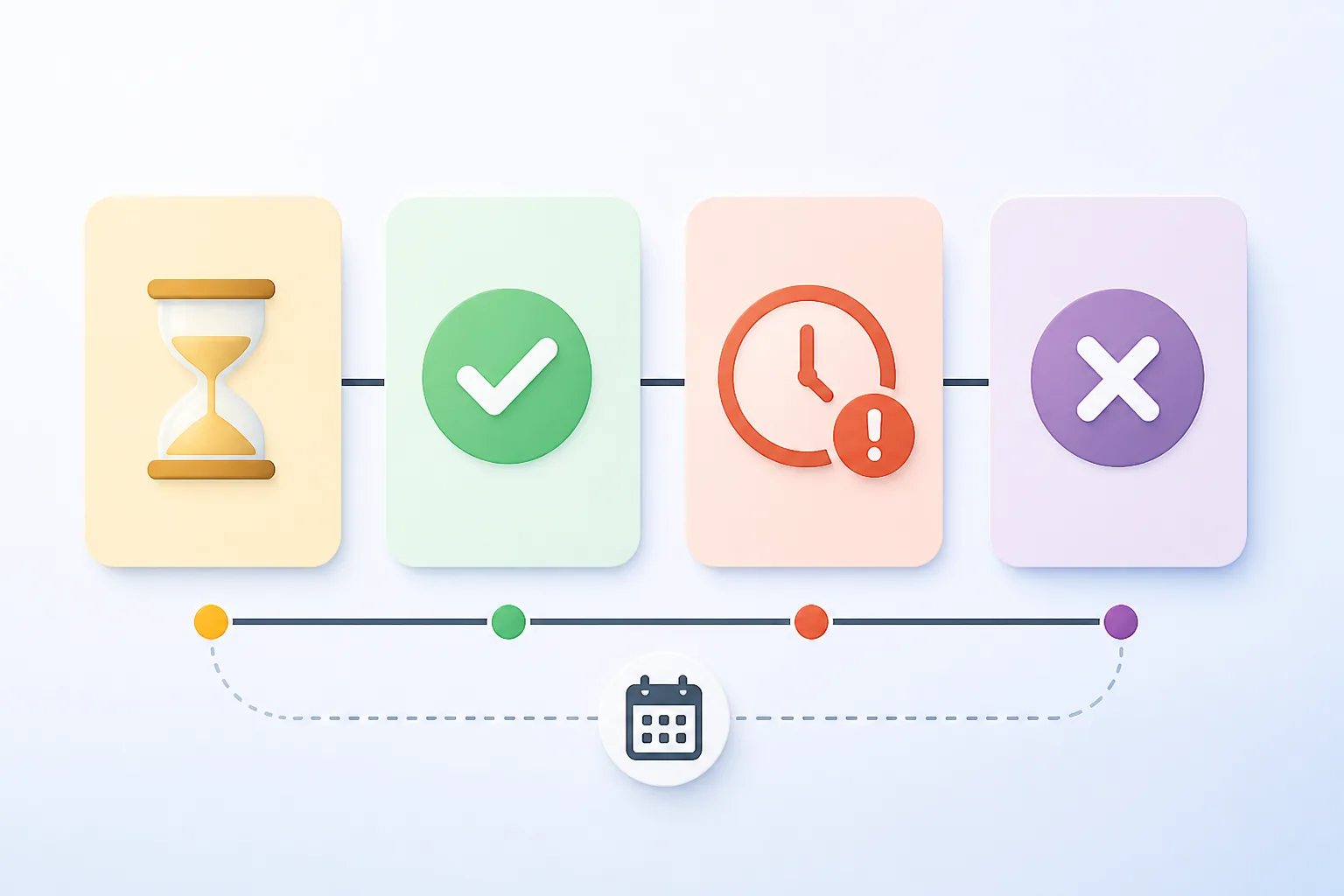
| Status | What it means | Next action |
|---|---|---|
| Pending | The request was sent and payment has not yet been confirmed. | Review again before or on the due date. |
| Paid | Payment was received and confirmed. | Record the confirmation date and retain the request history. |
| Overdue | The due date has passed and the payment remains unconfirmed. | Send a concise, factual follow-up. |
| Cancelled | The request should no longer be collected, such as after a correction or replacement. | Keep the record and link it to the corrected request where applicable. |
Do not mark a request paid based only on an expectation that payment was sent. Confirm receipt first. Conversely, do not leave a confirmed payment marked pending, since that can trigger an unnecessary reminder and create avoidable friction.
Build a review rhythm around the due date
Payment tracking is most reliable when it is a recurring administrative task, not a search undertaken only when a problem appears. A short review at three points in the cycle keeps status information current:
- After sending: Confirm the request contains the right charge, period, amount, split, due date, and tenant email address.
- Shortly before the due date: Check which requests are still pending. A brief courtesy reminder can surface an upcoming charge without treating it as late.
- Promptly after the due date: Review unconfirmed requests, update any newly received payments, and follow up on remaining balances.
Variable expenses need special attention. A utility bill received in one month may cover service from an earlier period, so the service dates should remain visible in the request. Before sending, check the source amount and the agreed allocation method. Our Utility Bill Split Calculator can help you calculate equal and percentage-based shares before you create a request.
How to send reminders that keep the conversation factual
A reminder should let a tenant identify the exact request and choose a straightforward next step. It should not guess why payment has not been made or turn a routine status update into a personal accusation.

A pre-due-date reminder can be brief:
Hello, a reminder that your April water payment of $50 is due May 10. The original request includes the billing period and split details. Please reply if you have a question about the amount.
After the due date, refer to the recorded status:
Hello, our records show the April water payment request for $50, due May 10, is still pending. Please let us know once payment has been made, or reply if you need the request resent or need clarification on the charge.
Both examples identify the expense, amount, and due date while leaving room to resolve an ordinary issue, such as a missed email, payment sent under a different reference, or a question about the split. Send payment requests and reminders individually rather than revealing one tenant’s payment status in a group message.
What to do when the payment record and tenant’s account differ
When a tenant says they paid, begin with the record instead of repeating the reminder. Check the request amount, due date, status, payment date, and any available confirmation. It is also worth checking whether the payment was associated with a different billing period or reference.
When the question concerns the amount, return to the source details: the bill total, billing period, documented split rule, and calculated tenant share. If there is an error, correct the request promptly and issue an updated final amount. If the calculation is correct, a short explanation connected to those details is more useful than a stronger demand for payment.
Keeping the original request, reminders, corrections, and payment confirmation together creates a chronology that can answer common questions without relying on memory or scattered inboxes.
Keep routine reminders separate from formal notices
Routine email follow-up is an administrative way to clarify an outstanding request. It is not a substitute for any formal notice or enforcement process that may apply under a rental agreement or local rules. Requirements for late-payment notices, fees, and tenancy consequences can vary by jurisdiction, so review the relevant agreement and applicable requirements before using language that threatens legal action or other consequences.
For ordinary follow-ups, clarity is usually more productive than escalation: state what remains pending, identify the original due date, and offer to resend the request or explain the charge.
Important boundary
A routine reminder is not a formal notice
Keep ordinary payment emails factual and administrative. Late-payment notices, fees, and tenancy consequences can be regulated, so confirm the rental agreement and applicable requirements before using enforcement language.
A repeatable monthly payment tracking workflow
Monthly checklist
A payment-tracking routine for each billing cycle
Use the same short sequence for rent and every shared expense to keep requests and follow-up organized.
- Enter the confirmed amount and the correct billing or rental period.
- Review tenant assignments, payment details, split percentages, and due date before sending.
- Send an itemized email request that states the amount due and the next action.
- Check pending requests shortly before the deadline and send a neutral courtesy reminder where appropriate.
- After the due date, confirm received payments and follow up on requests still marked pending.
- Keep the original request, reminders, questions, corrections, and payment confirmation with the charge record.
zSplit supports this workflow by letting you set equal or custom percentage splits, send email payment requests, and view payment status for rent and shared expenses. Our guide to using zSplit explains the setup and monthly process. Pro and Pro Plus plans organize requests with pending, paid, overdue, and cancelled statuses; those plans also support resending requests, and Pro Plus includes overdue reminders.
Make the next follow-up easier than the last
The goal of payment tracking is not to send more messages. It is to make every request easy to understand and every status easy to verify. A complete original record, timely status updates, and neutral reminders give you a dependable process for rent and shared expenses while giving tenants a clear way to act or raise a genuine question.
Helpful answers
Frequently Asked Questions
Put payment follow-up on a clearer track
Create an account to organize shared expenses, send email requests, and keep payment status visible in one workflow.