To organize shared expenses for rental properties, give each charge one complete record: the source bill, the billing period, the agreed allocation rule, each tenant’s amount, the due date, the request sent, and the final payment status. This approach makes a monthly expense easier to explain, correct, and follow up on without digging through separate emails and spreadsheets.
At zSplit, we help landlords and rental property owners keep rent and shared expenses connected to tenant shares, email payment requests, and payment tracking. The objective is not to make every property use the same split. It is to make the arrangement for each property visible and repeatable.
Start with an expense record, not a monthly total
A total labeled simply “utilities” does not provide enough context when someone needs to check a charge later. Shared costs can cover electricity, water, gas, internet, garbage, maintenance, or another property expense. A complete record distinguishes one charge from the next, particularly when bills arrive late or cover dates that differ from the calendar month in which they are received.
For every recurring or occasional shared expense, record:
- the property and the participating unit or tenants;
- the specific expense name and service period;
- the source amount and any supporting bill or document;
- the tenant-paid portion, including any owner or common-area portion kept separate;
- the documented allocation method and resulting individual shares;
- the request date, due date, payment instructions, and current status.
Keeping these details together matters because an amount can be mathematically correct but still confusing if the billing period or allocation basis is missing. It also lets you investigate a question about a charge without treating it as a question about payment.
Document the allocation before entering the next bill
The allocation rule should come from the rental arrangement and applicable requirements, rather than from which method produces a preferred result in a particular month. Review the lease or rental agreement before charging separately for shared costs or changing an established arrangement.
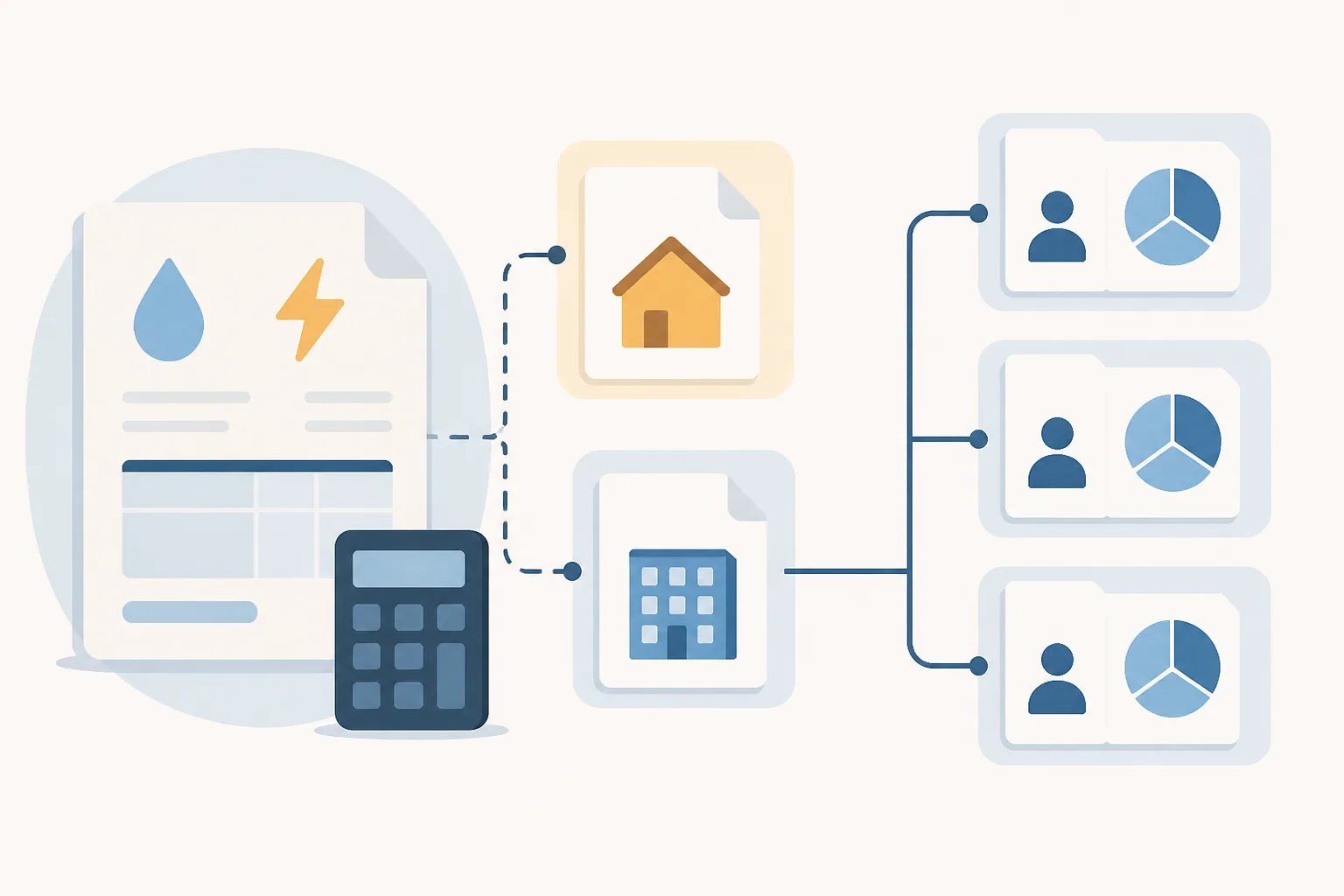
Common allocation structures include equal shares, fixed percentages, and shares based on measured usage where reliable, agreed measurement is available. Unit size can also be used to establish fixed percentages where that matches the arrangement. Each method answers a different question:
| Method | What it does | Record to retain |
|---|---|---|
| Equal split | Divides the tenant-paid amount evenly among agreed people or units. | Who participates and whether the split is by person or unit. |
| Fixed percentage | Applies a saved percentage to the actual bill each cycle. | The percentage assigned to each tenant or unit and why it applies. |
| Measured usage | Uses actual, agreed consumption data where it is available. | The measurement source and treatment of fixed charges or common-area use. |
If part of a bill belongs to the owner or common areas, calculate that portion first. Then divide the remaining tenant-paid amount. For example, if the owner covers 10% of a $300 bill, the tenant-paid portion is $270. Dividing that remainder equally among three tenants produces $90 per tenant. This makes the difference between the source bill and collected total understandable.
Before establishing recurring percentages, our Unit Split Percentage Calculator can help check equal or square-footage-based unit shares. For a single bill, the Utility Bill Split Calculator can calculate equal and percentage-based amounts.
Keep rent, variable utilities, and corrections separate
Rent is often a fixed recurring charge, while utility totals and service dates can change. Combining them into one unexplained balance makes it harder to see what has been paid, disputed, or corrected. Separate line items preserve the meaning of each obligation and avoid having a question about a water bill obscure the status of rent.
Corrections also need their own trail. If a billing period, amount, or split was entered incorrectly, retain the original request as part of the history, mark it cancelled when appropriate, and issue an updated request with a clear final amount. Quietly overwriting the original figure can make later reconciliation difficult.
When a source bill is available, sharing it can help a tenant verify a variable charge. In zSplit, Pro and Pro Plus users can attach PDF files or images to bill payment requests.
Make every payment request self-explanatory
An itemized request reduces the need for follow-up questions. A tenant should be able to identify the expense and decide whether the amount looks correct without searching through old messages.
A useful request states the expense, service period, total bill where relevant, allocation method, exact amount due, payment instructions, and a specific due date. For example: “Your April water share is $50. The total bill is $200, divided equally among four agreed occupants. Payment is due May 10.” The recipient can see both the result and the calculation behind it.
In zSplit, you can calculate tenant shares, send email payment requests, and retain the details of sent requests in one workflow. A request still needs a final review before it is sent: check the actual bill amount, selected property, billing period, tenant email address, saved split, and due date.
A monthly shared expense workflow that preserves the paper trail
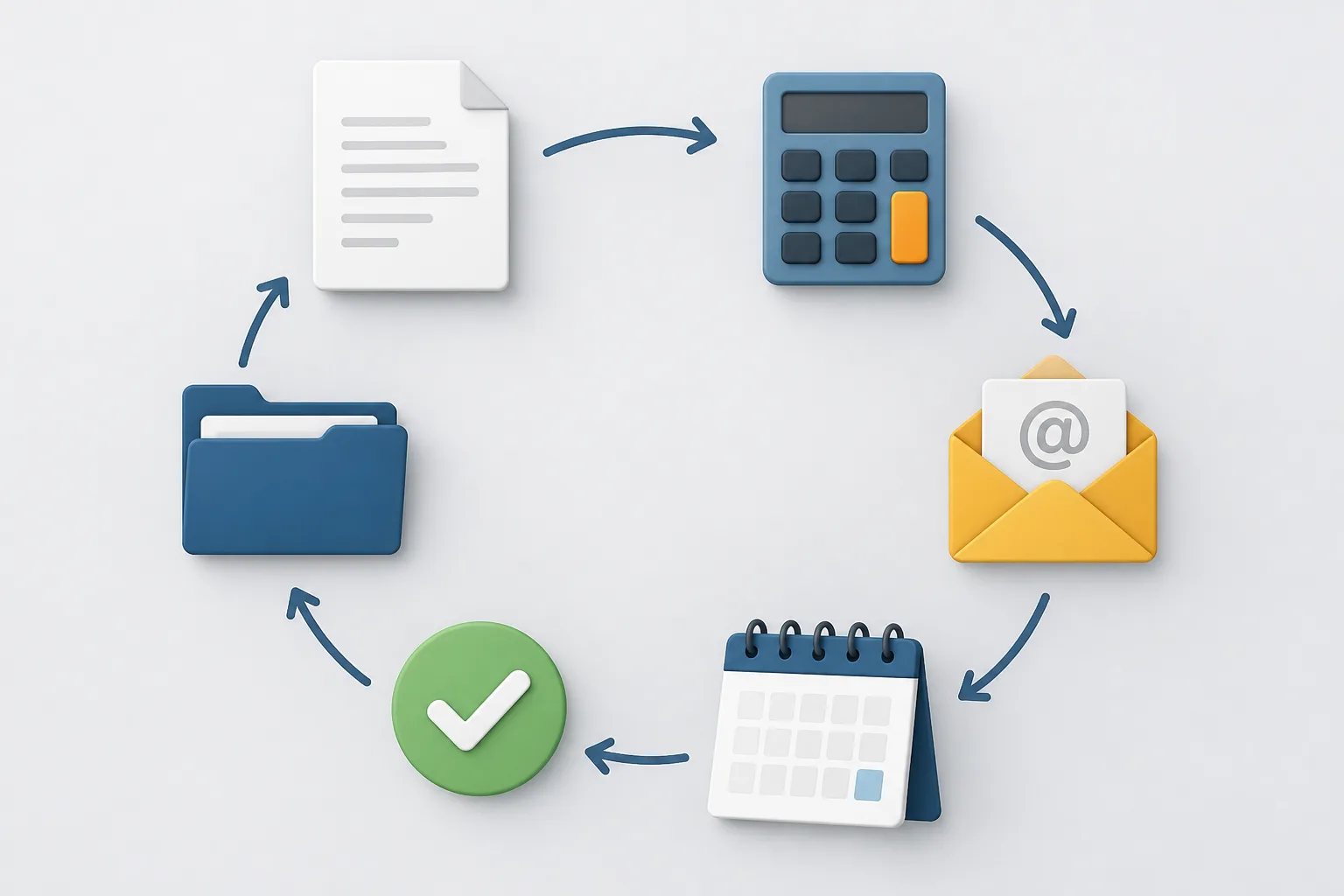
A short, repeatable cycle is more reliable than reconstructing information only after an amount becomes overdue. Use the same sequence for each shared charge while keeping the underlying arrangement available for reference.
Monthly record checklist
Close each shared expense cycle in the same order
Use this short sequence to keep the bill, request, and payment history connected.
- Enter the confirmed source amount and correct service period.
- Check the participating tenants or units, owner portion, and saved allocation before calculating shares.
- Review each request for the expense name, amount due, payment instructions, and specific due date.
- Send individual itemized email payment requests.
- Review pending requests shortly before and after the due date.
- Confirm received payments, update the status, and retain any reminder or correction with the original record.
Use payment statuses as a record of what happened next
A sent request is not the end of the record. It remains pending until payment has been received and confirmed. Once confirmed, update it as paid promptly so a tenant does not receive an unnecessary reminder. If the due date passes without confirmed payment, an overdue status identifies the request that needs a factual follow-up. A cancelled status preserves the history of a request that should no longer be collected.
All zSplit accounts can view sent payment request history and request details. Pro and Pro Plus plans add payment-status tracking, reports, and exports. Those plans also support resending requests, while Pro Plus includes overdue reminders. Our guide to using zSplit explains the setup and monthly workflow.
Follow up on the record, not an assumption
Before sending a reminder, verify the payment record. Check the request amount, billing period, original due date, current status, and any available payment confirmation. A payment may have been associated with another reference, or the tenant may need the original request resent.
Keep routine messages concise and factual: identify the expense, amount, due date, and status, then offer a practical next step such as confirming payment, resending the request, or clarifying the calculation. Send requests and reminders individually rather than exposing one tenant’s payment status in a group message.
Administrative boundary
Routine payment reminders are not formal notices
Routine email follow-up should remain factual and administrative. Requirements for late-payment notices, fees, and tenancy consequences can vary by jurisdiction, so review the rental agreement and applicable requirements before using enforcement language.
Organized shared-expense management is ultimately a traceability practice. For every amount, you should be able to move from the source bill to the agreed split, the request, the follow-up, and the payment confirmation. That record makes routine administration clearer for both landlords and tenants.
Helpful answers
Frequently Asked Questions
Put shared expense records in one workflow
Set up tenant shares, send itemized payment requests, and keep each request connected to its payment status.