A useful tenant payment request email template does more than ask for money. It gives the recipient enough information to identify the charge, check the amount, and respond without searching through old messages. For rent, that may be a short note. For utilities and other shared expenses, include the total bill and the agreed split so the requested amount is easy to verify.
The most practical format is consistent: name the expense, state the period it covers, show the amount and due date, explain any shared-cost calculation, and provide a simple next step. That structure creates a clearer record for both the landlord and tenant.
What every tenant payment request email should include
Each request should answer a few basic questions at a glance. Missing details can make a current charge look like an old balance, a duplicate request, or an unexplained figure.
- Specific charge name: Use a label such as “June rent,” “April water,” or “May internet” rather than a broad label like “payment.”
- Billing or rental period: State the month or service dates. A bill received this month can cover service from an earlier period.
- Exact amount due: Give the currency amount assigned to that tenant.
- Split details for shared costs: Show the total bill and the agreed basis, such as an equal split or a set percentage, when that context applies.
- A full due date: A calendar date is clearer than “soon” or “by the end of the week.”
- Payment instructions or confirmation step: Tell the tenant how to pay or how to let you know payment was sent.
- A route for questions: Invite a question about the amount or calculation before confusion becomes a longer dispute.
For example, “Your share of the April water bill is $50, due May 10” establishes the basic request. Adding that the total bill was $200 and was divided equally among four tenants explains how the $50 figure was reached.
Tenant payment request email template for rent
Rent is often a fixed recurring charge, so the email can remain brief as long as it clearly identifies the period, amount, and deadline. Adapt the wording to the payment arrangement already in place.
Subject: June rent payment due June 1
Hello [Tenant Name],
This is a payment request for June rent in the amount of $[amount]. Payment is due [full date].
Please follow the established payment instructions, and reply if you need the request resent or have a question about the charge.
Thank you.
The bracketed fields above are part of the email template, not information to leave in a sent message. Replace each one before delivery. A fixed rent request does not need a utility-style calculation, but it still needs a clear period and due date.
Tenant payment request email template for a shared utility
A variable bill needs more explanation because the total and tenant share can change. The tenant should be able to see both the amount requested and the allocation behind it.
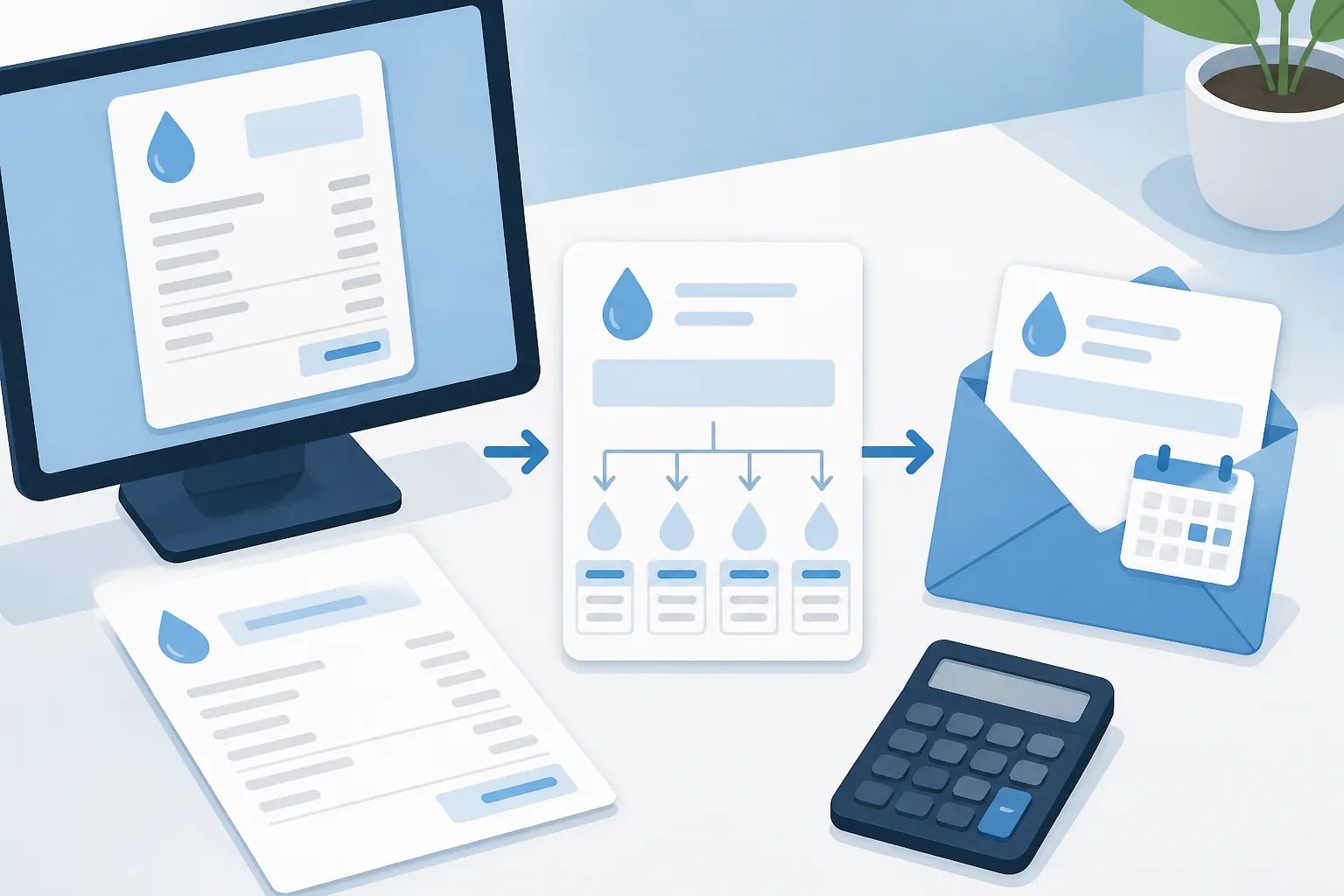
Subject: April water payment due May 10
Hello [Tenant Name],
Your share of the April water bill is $50. The total bill is $200, split equally among four agreed tenants. Payment is due May 10.
Please follow the established payment instructions. Reply if you have a question about the bill or calculation.
Thank you.
Where the documented arrangement uses percentages, state the percentage and the source amount. If part of a bill is attributable to an owner-used space or common area, establish that portion before calculating tenant shares. The amount passed on to tenants should not leave an unexplained difference from the full bill.
Before sending a shared-expense request, you can check an equal or percentage allocation with our Utility Bill Split Calculator. For fixed unit percentages based on equal shares or square footage, our Unit Split Percentage Calculator can help establish the percentages first.
Use a pre-send check for every request
Accurate math does not help if the wrong bill total, service period, tenant email address, or saved split was used. A short review before delivery catches errors while they are still simple to correct.
Pre-send checklist
Check these details before sending a payment request
Review the source bill and request details before each email, especially when the charge or tenant split changes from one cycle to the next.
- Confirm the expense name and correct rental or service period.
- Compare the entered amount with the source bill or documented fixed charge.
- Check the participating tenant, email address, and assigned unit where applicable.
- Verify the equal or percentage split and any owner or common-area portion.
- Make sure the exact amount due and full due date are visible.
- Confirm that payment instructions and the question route are complete.
Keep rent and shared expenses as separate records
Combining rent and variable utilities into one unexplained total makes it harder to see what was paid, what is being questioned, and what needs correction. Separate line items preserve the meaning of each charge. A question about an April water bill can then be addressed without making a tenant’s June rent status unclear.
If a request contains an error, retain the original record, cancel it when appropriate, and send an updated request with a clear final amount. Quietly changing an old figure can make later reconciliation difficult, especially if the tenant has already received the first email.
We built zSplit to organize this recurring work in one place. You can set equal or custom percentage splits, send email payment requests for rent and shared expenses, and keep the details of sent requests available for review. Our guide to using zSplit explains the setup and monthly workflow.
How to word a reminder without making it personal
A reminder should refer to the recorded charge rather than assume why payment has not been confirmed. A missed email, a payment sent under a different reference, and a question about a calculation are different situations, but each can begin with the same factual message.

Before the due date: “A reminder that your April water payment of $50 is due May 10. The original request includes the billing period and split details. Please reply if you have a question about the amount.”
After the due date: “Our records show the April water payment request for $50, due May 10, is still pending. Please let us know once payment has been made, or reply if you need the request resent or need clarification on the charge.”
Send requests and reminders individually rather than using a group message that reveals another tenant’s payment status. Before following up, check whether payment was received but not yet recorded and whether the request is attached to the correct period.
Keep routine email follow-up separate from formal notices
Administrative boundary
Routine reminders are not formal notices
Keep routine payment emails factual and administrative. Late-payment notices, fees, and tenancy consequences can be regulated and vary by jurisdiction, so review the rental agreement and applicable requirements before using enforcement language.
Routine payment emails are useful for ordinary administration: they document the charge, surface a pending item, and make it easier to correct a mistake. They are not a substitute for a formal notice process. If a matter moves beyond a routine follow-up, review the rental agreement and the requirements that apply where the property is located before referring to fees, legal action, or tenancy consequences.
A clear request is not necessarily a long request. It is a complete one: the tenant can identify the expense, understand the amount, see the deadline, and know what to do next. Keeping that same structure for each billing cycle makes payment communication easier to review and act on.
Helpful answers
Frequently Asked Questions
Bring payment requests into one clear workflow
Create an account to set shared expense splits, send email payment requests, and keep request details organized.