A shared expense ledger for rental properties should do more than show a running balance. For every rent or shared-cost charge, it should show what the charge covers, the billing period, the source amount, the agreed split, the amount requested from each tenant, the due date, and the current payment status. That structure makes routine questions easier to answer and helps prevent an old utility bill from becoming an unexplained amount months later.
At zSplit, we help landlords and rental property owners calculate tenant shares, send email payment requests, and keep payment information organized. A useful ledger does not require every property to use the same allocation method. It requires each property’s documented arrangement to be visible, repeatable, and traceable.
What a shared expense ledger should show
Think of the ledger as a record of individual charges rather than a single account total. A balance labeled “utilities” cannot tell you whether it relates to water, electricity, internet, a correction, or multiple billing periods. One identifiable record per charge preserves the context needed to review it later.
For a variable shared expense, keep these details connected:
- Charge name: Use a specific label, such as “April water” or “May internet.”
- Service or rental period: Record the dates or month the charge covers, not only the month the request was sent.
- Source amount: Retain the bill amount or supporting record that explains a changing cost.
- Tenant-paid portion: Identify any documented owner or common-area amount before calculating tenant shares.
- Allocation basis: State whether the tenant-paid portion is divided equally, by fixed percentage, or by another documented method.
- Request details: Keep the individual amount due, payment instructions, due date, and sent request together.
- Current status: Record whether the request is pending, paid, overdue, cancelled, or corrected through a replacement request.
This level of detail matters because a calculation can be correct while still being hard to understand if the service period or split basis is missing.
Start with the tenant-paid amount, not automatically the full bill
The full source bill is not always the amount allocated to tenants. When a documented arrangement assigns part of a charge to an owner-used space or common area, calculate that portion first. Then apply the agreed tenant split to the remainder.
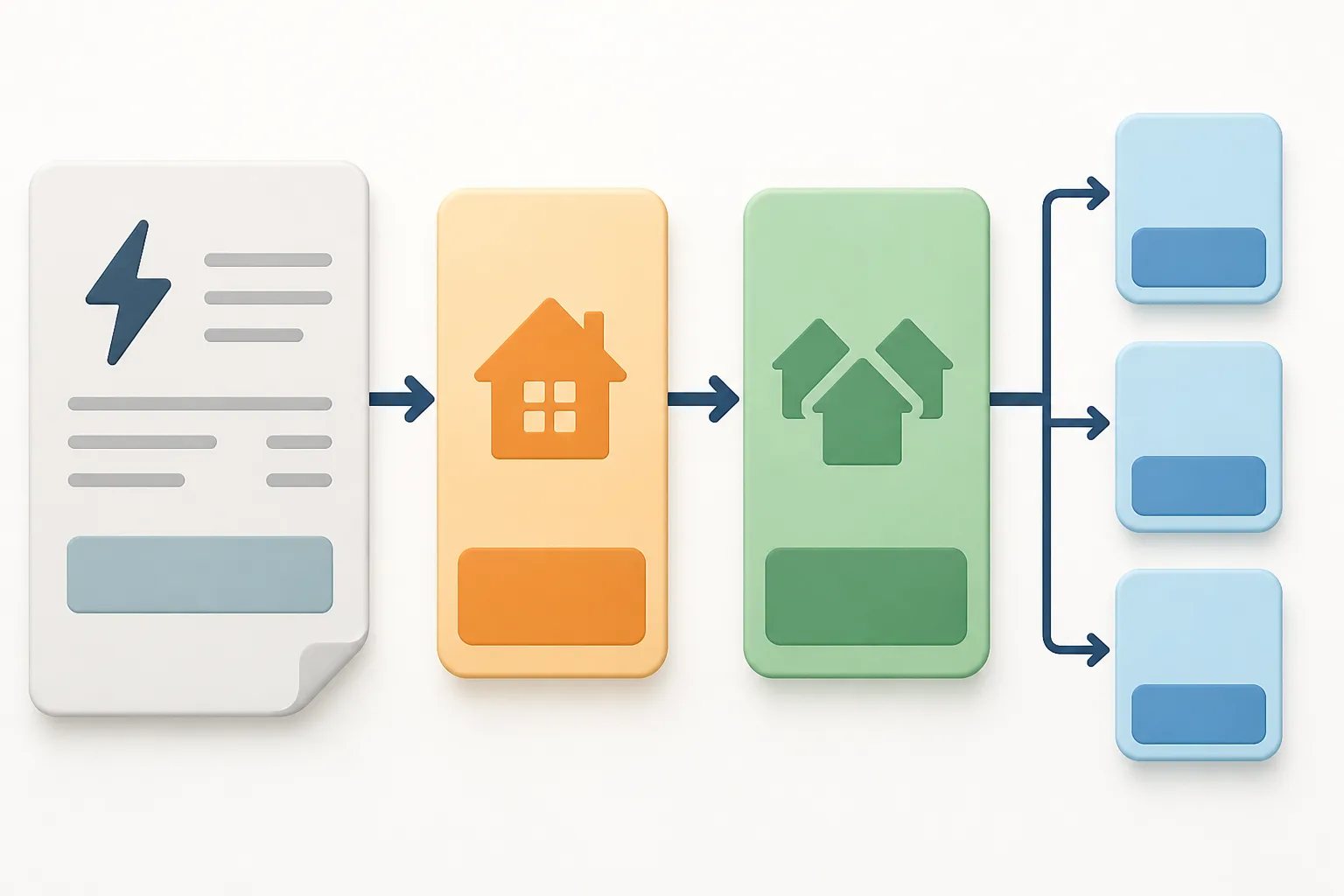
For example, assume a $300 electricity bill has a documented 10% owner share. The owner portion is $30, leaving $270 for tenants. If three tenants divide that remainder equally, each share is $90. Dividing the full bill equally would produce $100 per tenant and leave the $30 owner portion unexplained.
Equal shares, fixed percentages, and measured usage can each be appropriate in different rental arrangements. The key is to follow the written arrangement and apply it consistently. A per-person equal split and a per-unit equal split can produce different results, so the ledger should make that distinction clear. Square footage can be used to establish fixed unit percentages where it matches the arrangement, but it is not a direct measurement of utility consumption.
Use our Utility Bill Split Calculator to check equal or percentage-based shares for a specific bill. For recurring unit percentages, our Unit Split Percentage Calculator can help estimate equal or square-footage-based shares.
Keep rent, shared costs, and corrections as separate entries
Rent is often a fixed recurring charge. Utilities and other shared expenses can vary in both amount and service period. Combining them into one unexplained balance makes it harder to see what has been paid, which item is being questioned, and whether a correction affects one charge or several.
Separate entries also make corrections easier to understand. If a water request was sent with the wrong service period or amount, retain the original request as part of the history, cancel it when appropriate, and issue an updated request with the clear final amount. Quietly overwriting the original figure can make later reconciliation difficult because the record no longer explains why the balance changed.
A clean ledger can show that one tenant’s rent is paid while a separate shared utility request remains pending. That is far more informative than a broad balance that blends unrelated obligations together.
Use a consistent status for every request
Payment status is the bridge between an expense calculation and the next administrative action. A small set of clear statuses is generally enough:
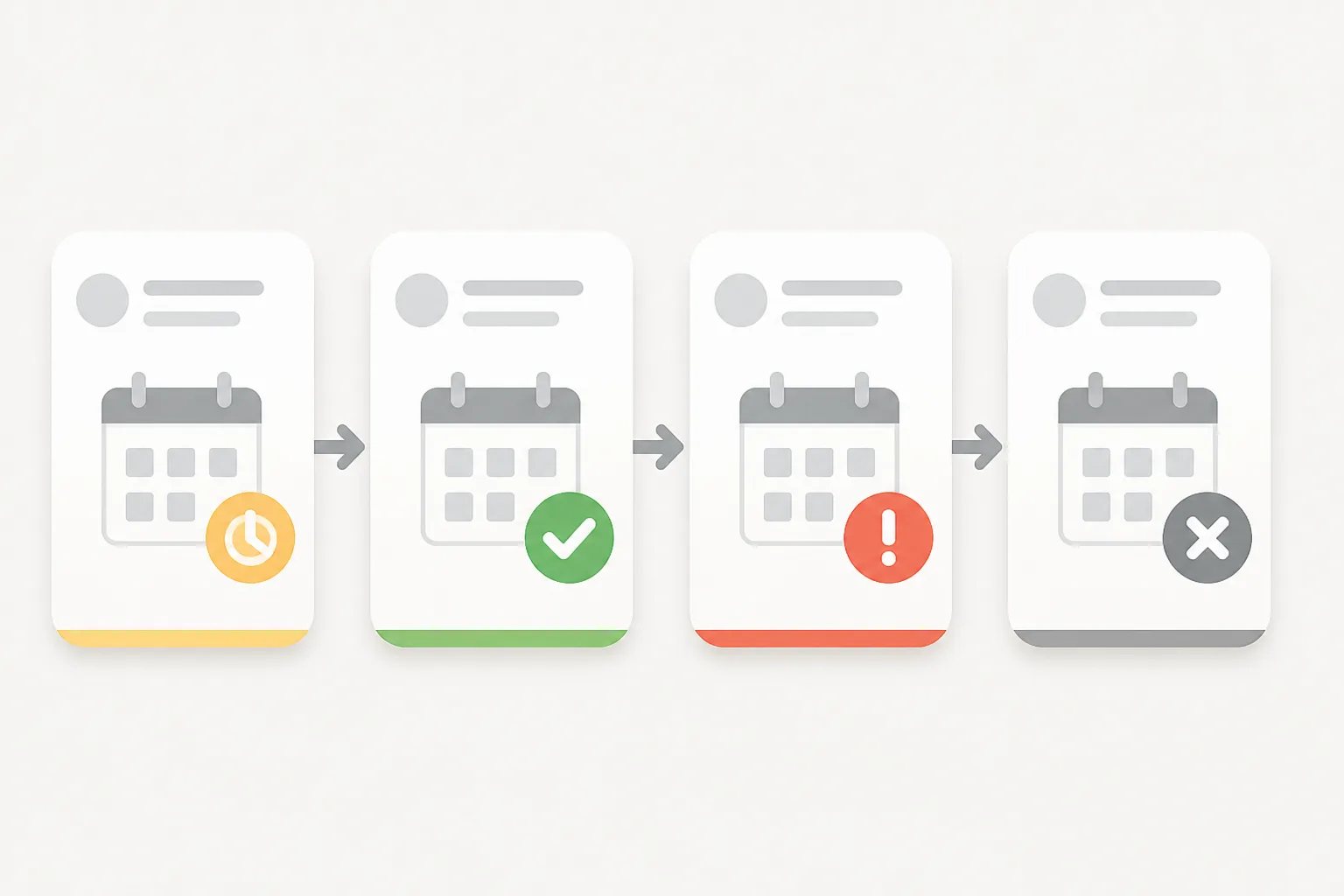
| Status | Meaning | What to do |
|---|---|---|
| Pending | The request was sent but payment has not been confirmed. | Review the request and due date. |
| Paid | Payment was received and confirmed. | Update the record promptly and retain the request history. |
| Overdue | The due date passed without confirmed payment. | Verify the record before sending a factual follow-up. |
| Cancelled | The request should no longer be collected, often because it was corrected or replaced. | Keep it connected to the replacement or correction record. |
Do not mark a request paid simply because payment was said to be sent. Confirm receipt first. On the other hand, a confirmed payment should not remain pending, since an outdated status can lead to an unnecessary reminder.
All zSplit accounts can view sent payment request history and request details. Pro and Pro Plus plans add payment-status tracking, reports, and exports. Those plans also support resending requests, and Pro Plus includes overdue reminders.
Run the same review before and after each due date
A ledger stays useful when it is updated as part of the billing cycle, not only after a question arises. The most reliable routine checks source information before the request is sent, then checks payment information around the due date.
Billing cycle checklist
Review each shared expense in the same order
Use this sequence to keep the bill, split, request, and payment history connected.
- Compare the entered amount and service period with the source bill or supporting record.
- Identify any documented owner or common-area share before calculating tenant amounts.
- Confirm participating tenants or units and the agreed allocation method.
- Check that individual shares add up to the tenant-paid amount.
- Review the expense name, amount due, payment instructions, recipient email address, and specific due date.
- After sending, confirm payments received and update each request to its current status.
- Keep reminders, cancellations, corrections, and payment confirmations with the original charge record.
In zSplit, landlords enter the bill amounts they receive. We do not connect to utility providers or automatically pull bill amounts, so comparing the entered amount and service period with the source document remains an essential step.
Write follow-ups from the record, not from assumptions
Before sending a reminder, verify the specific expense, billing period, amount due, original due date, and current status. A request may still appear unpaid because a payment was received but not recorded, was associated with another reference, or needs clarification.
A routine follow-up should identify the charge and offer a practical next step. For example: “Our records show the April water request for $50, due May 10, is still pending. Please let us know once payment has been made, or reply if you need the request resent or have a question about the charge.” This is clearer than referring to a vague outstanding balance.
Send requests and reminders individually. A group message can reveal another tenant’s payment status without helping resolve the individual charge.
Administrative boundary
A routine reminder is not a formal notice
Routine payment emails should stay factual and administrative. Before referring to fees, legal action, or tenancy consequences, review the rental agreement and the requirements that apply to the property.
Make the ledger a traceability tool
The purpose of a shared expense ledger is not merely to total money due. It should let you follow any charge from its source bill to the tenant-paid amount, documented split, payment request, follow-up, and confirmed payment. That path helps you answer questions without relying on memory or searching through disconnected emails and spreadsheets.
Our guide to using zSplit explains how to set up tenant shares and manage the recurring workflow. The practical standard is simple: if you can identify the charge, period, calculation, due date, and current status at a glance, the record is doing its job.
Helpful answers
Frequently Asked Questions
Keep shared expense records connected
Create a free zSplit account to calculate tenant shares, send itemized requests, and keep payment details organized.